Pareidolia
My second time working with poet Michael Brosnan was just as extraordinary as the first. This fourth collection, Pareidolia, is described as an “experimental passion project” by a reviewer and “explores the perception of apparently significant patterns in random or accidental arrangements of shapes and lines.” It is a collection of poems influenced by the pandemic and the discomfiting wildness of modern-day life, and he sought a cover that explored the same themes.
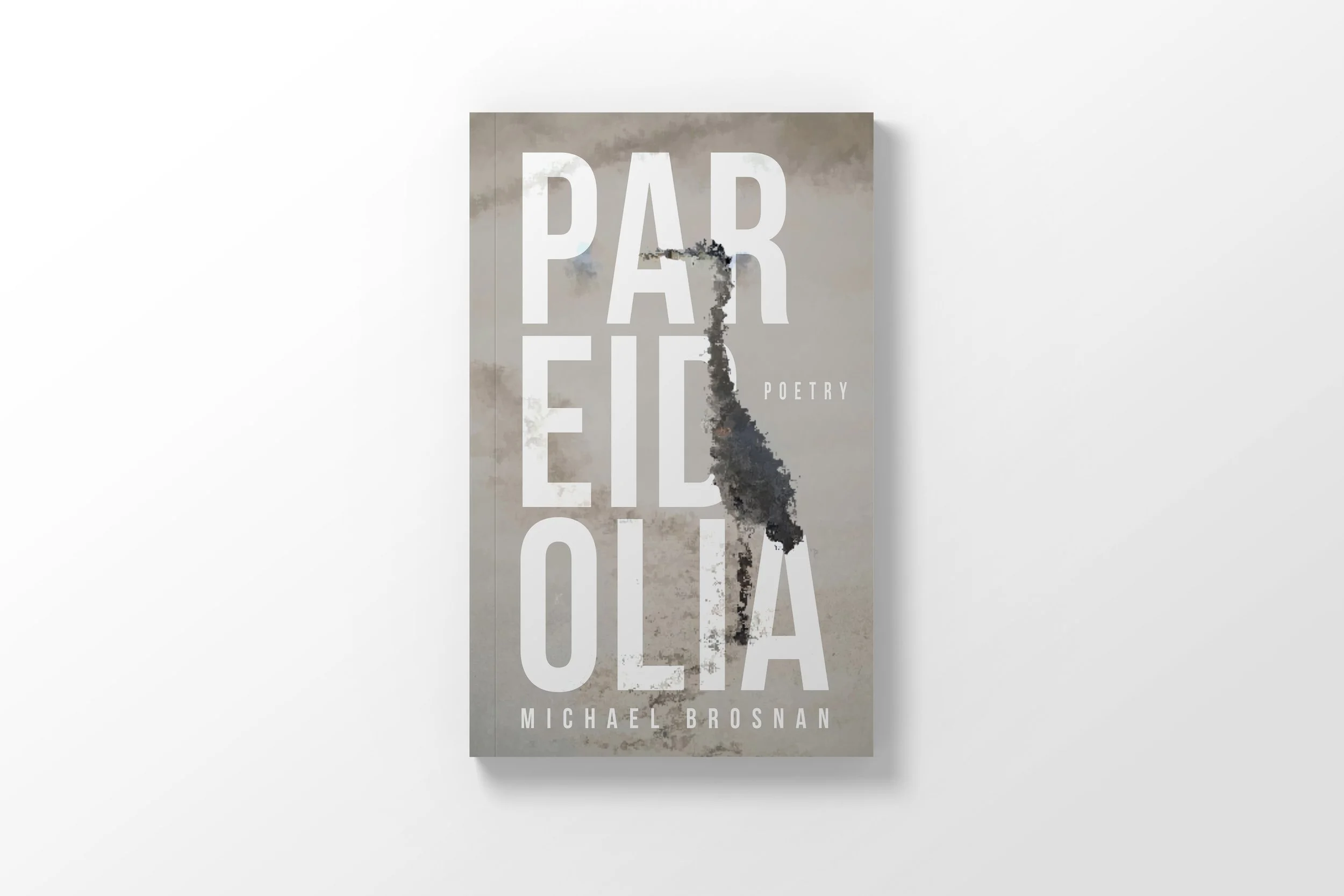
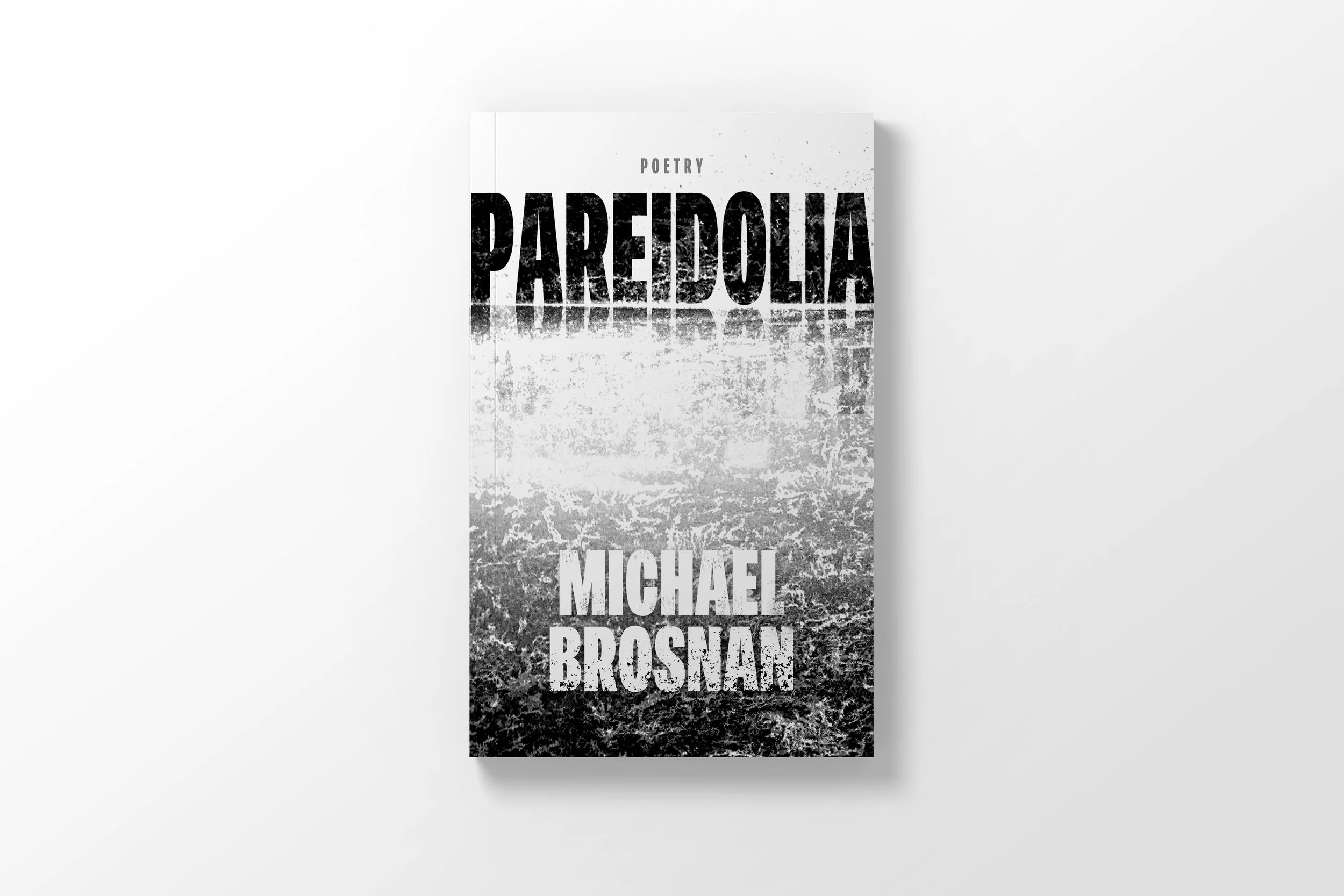
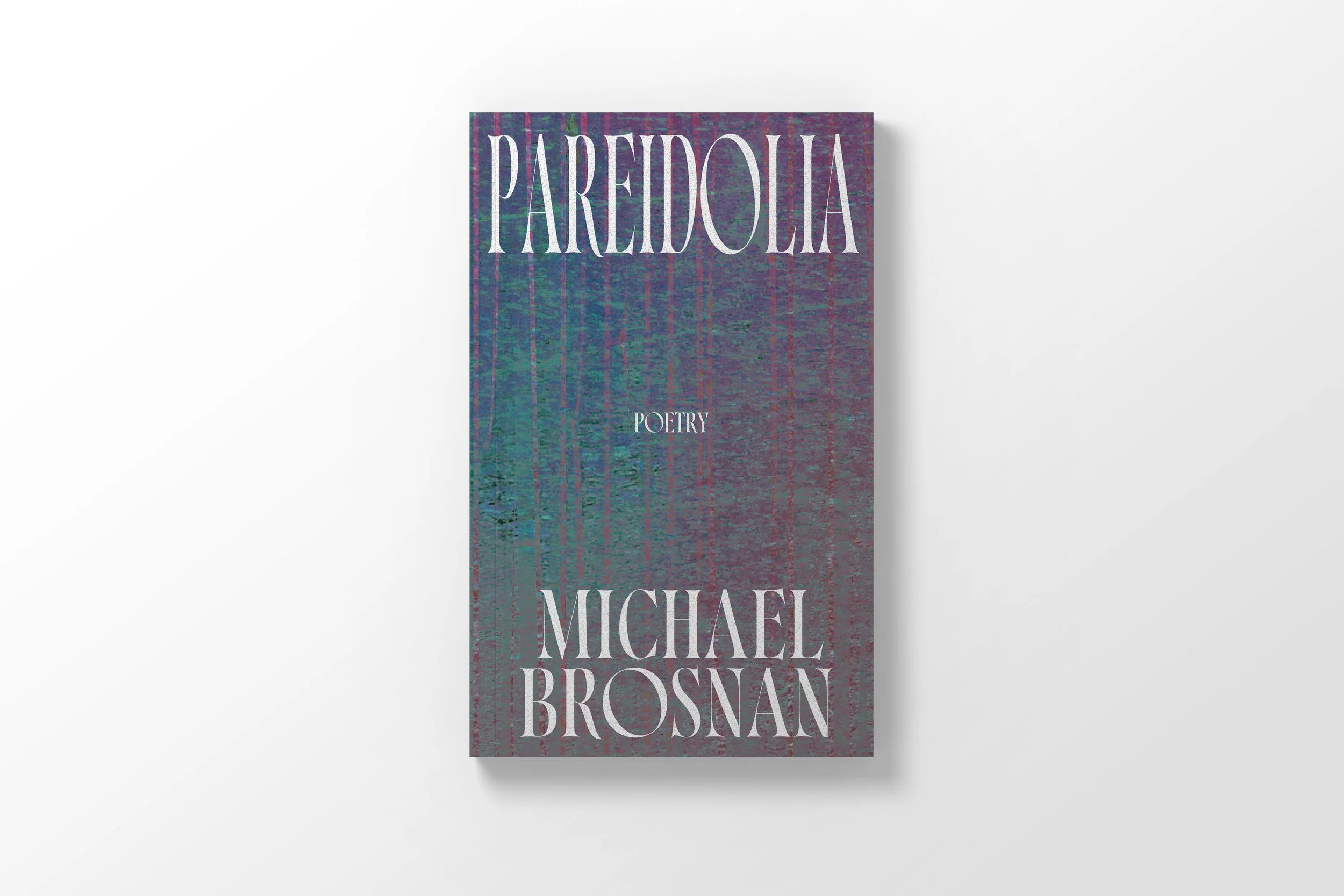
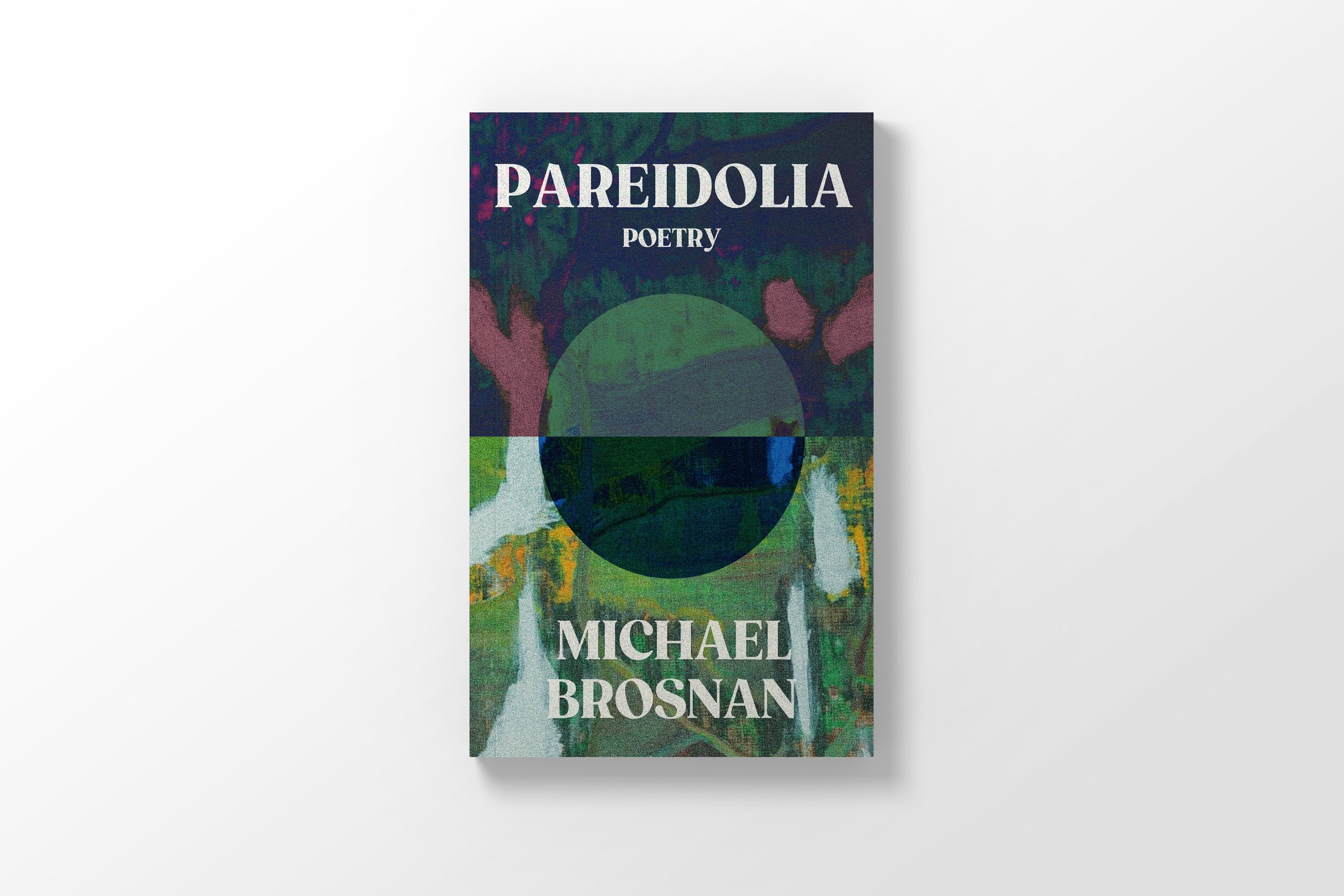
Michael came to me with a large collection of his own photography as inspiration for this next collection—most of which explore light, shadow, and patterns created through natural occurrences.
The interaction between salt and water in winter, clouds in the setting sky, birds in flight, and abstract art often captivated him. The natural patterns created by these existences stirred a curiosity and a focus worth capturing and studying.
The first iterations of the cover of Pareidolia used these ideas as focal textures.
The version with the blue heron resonated with something deep in Michael, and noted that herons are often symbols for searching for meaning. Jarod Anderson, in his memoir Something in the Woods Loves You states:
“The heron is exactly what the heron is to you in the moment you choose to give it meaning. It will be that meaning until you decide it means something else. That’s how meaning works. It’s a subjective act of interpretation.”
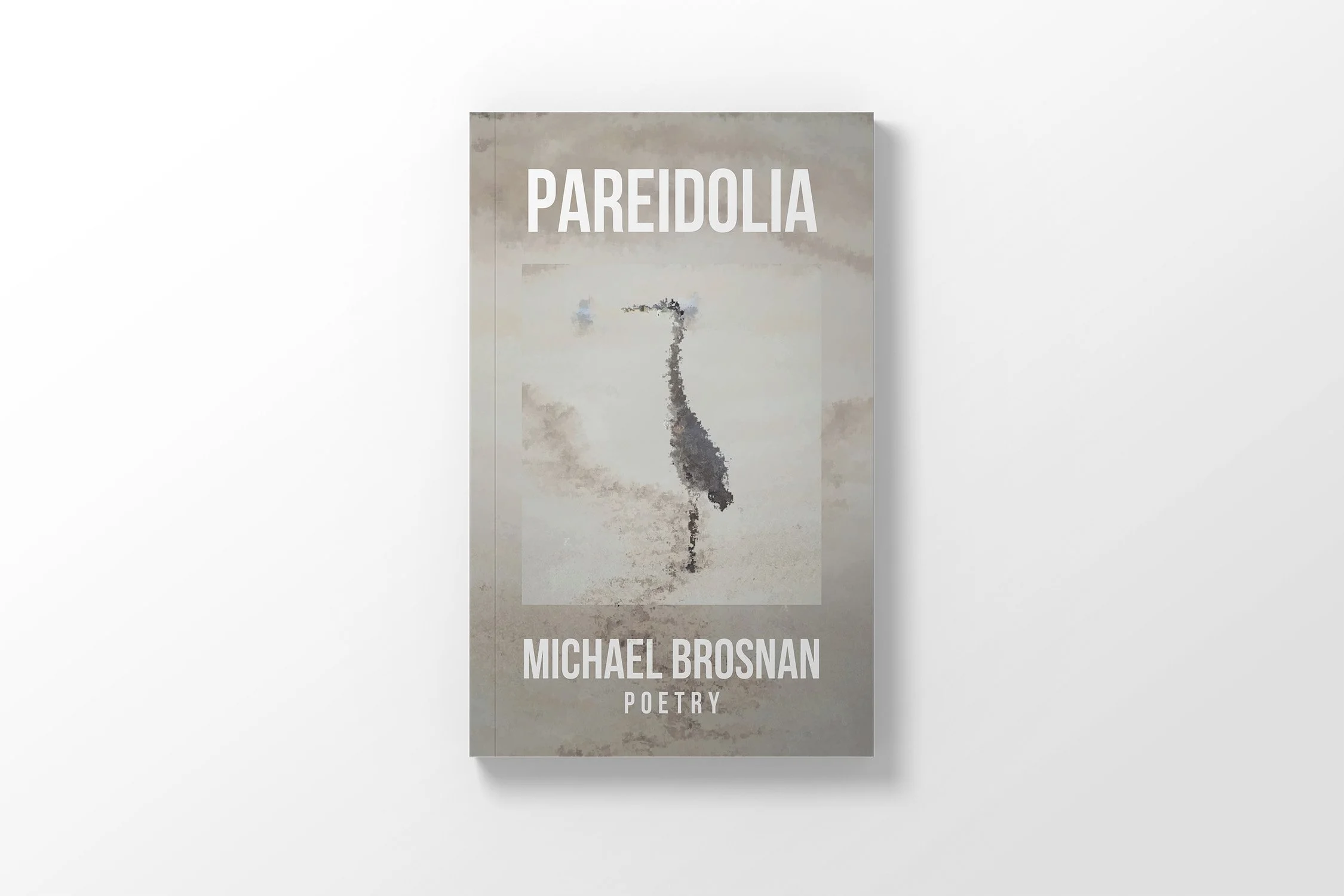
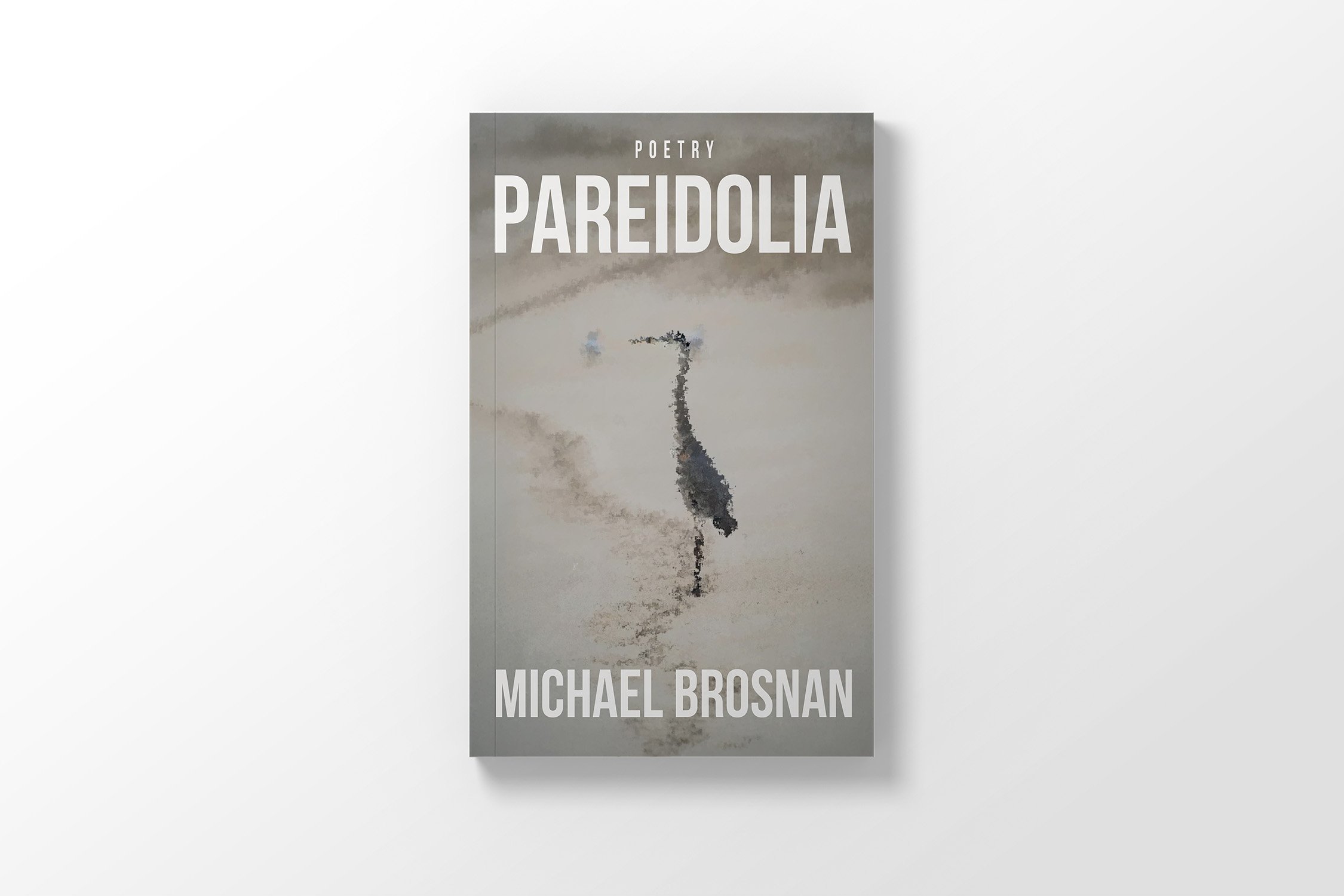
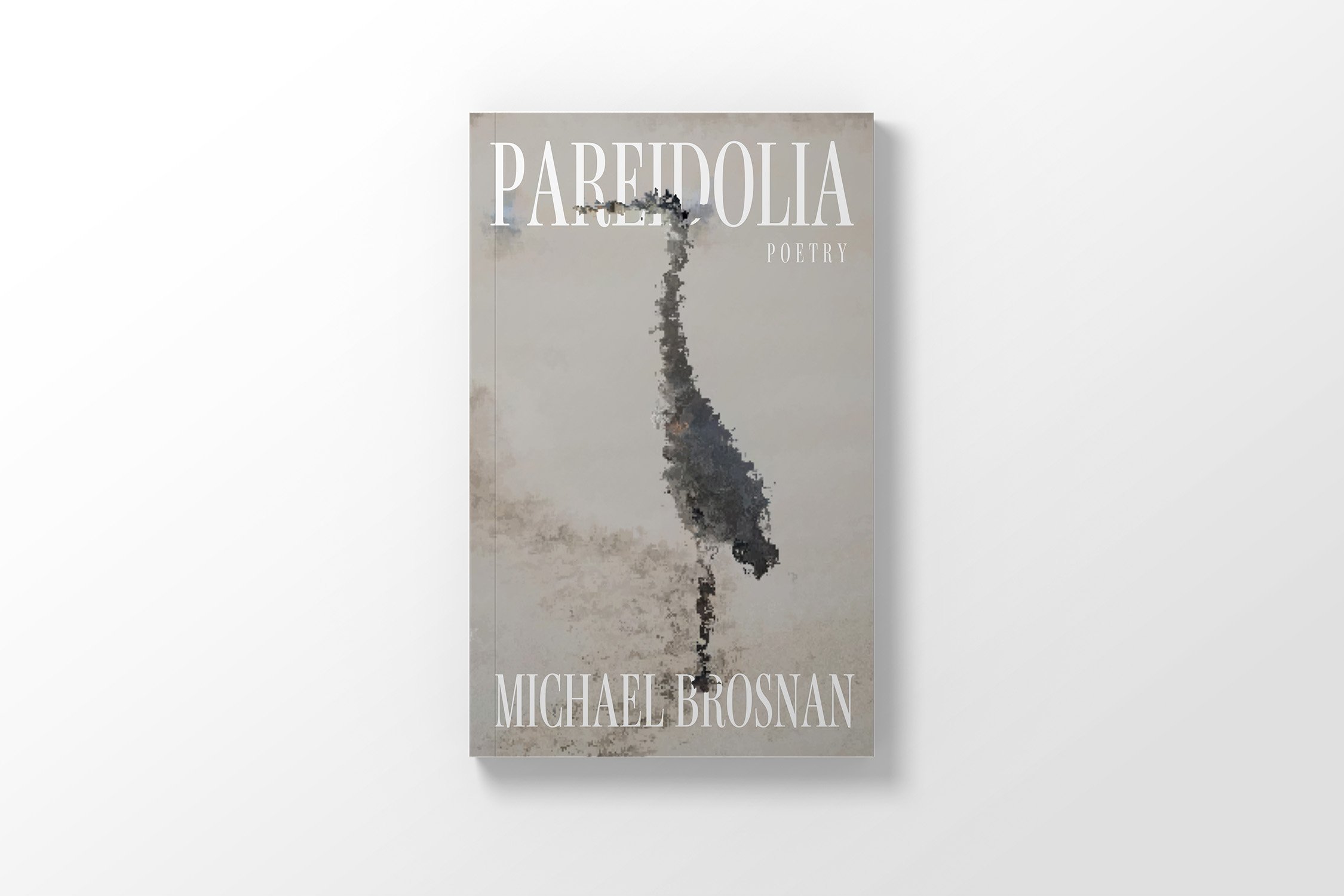
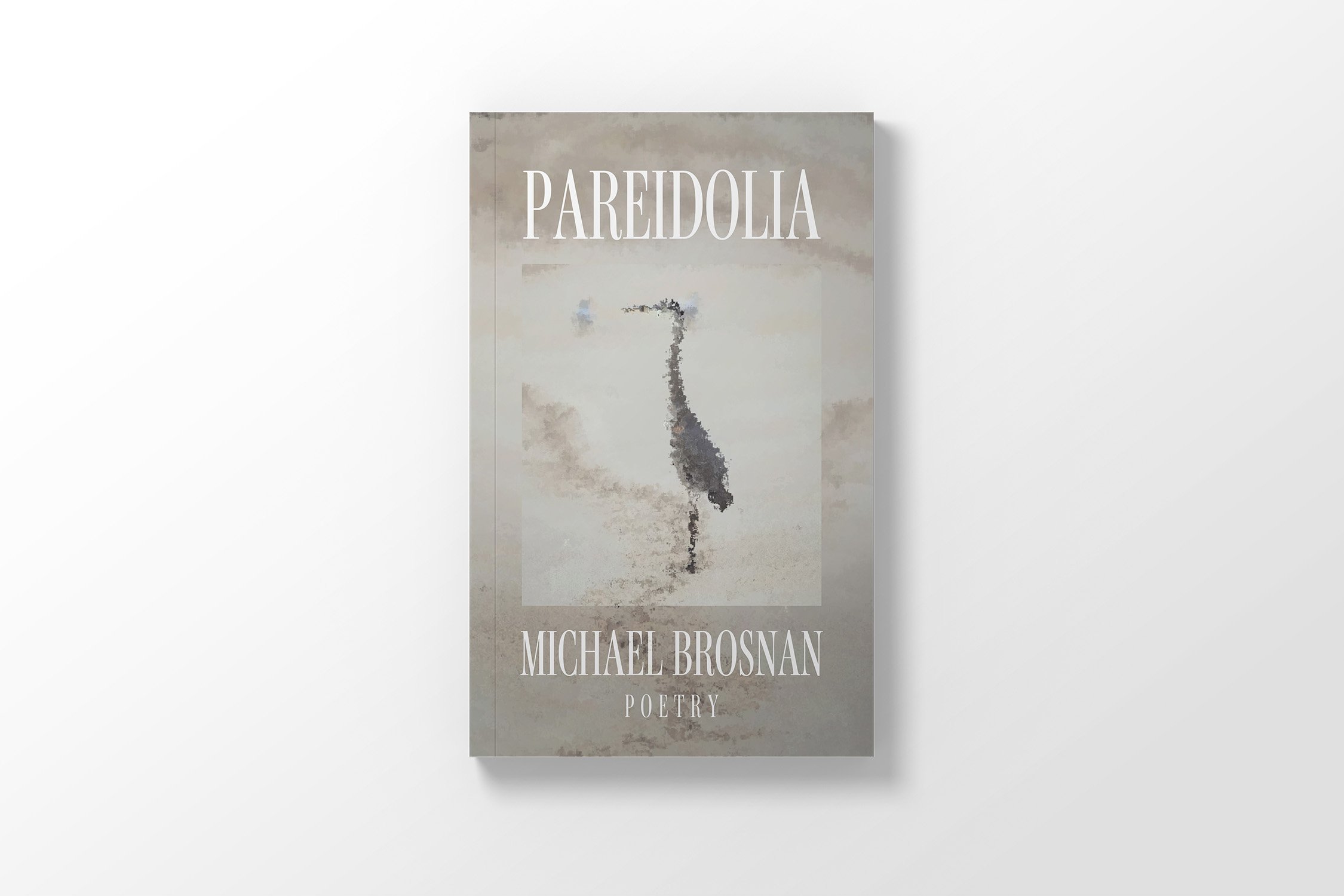
So, I continued down that path—a heron in various layouts alongside differing typefaces, conveying alternate subjective meanings to the reader—a sans-serif and clean frames vs serifs and obstructed views.
Upon review with Michael, though, there was something about the first iteration of the heron with the word “Pareidolia” broken into thirds, that tugged on his heartstrings. Maybe it even created a feeling of slight conflict—an interruption that felt right.
Pareidolia, an already obscure term for most, might be better read on one line rather than broken up into thirds, the rag following the silhouette of the heron. However, we agreed that the breaking of the word encourages readers to join in making meaning of the complex world around us—the entire underlying message of his collection.
You can find his published book here.